

Black Boys Burning
Erasing Black history

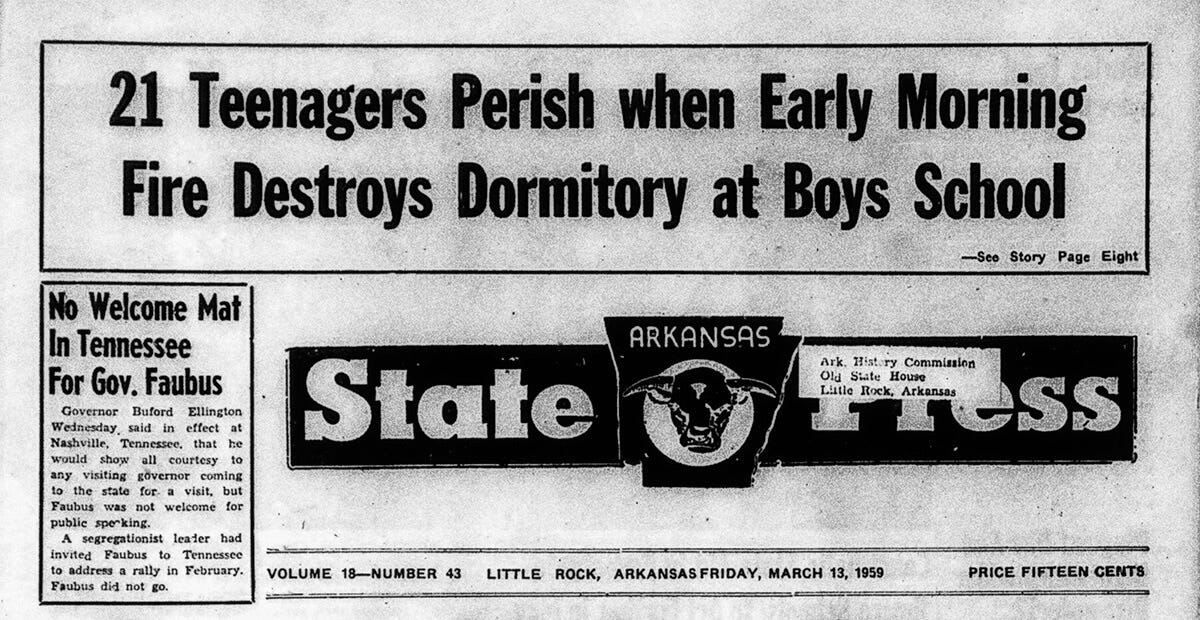
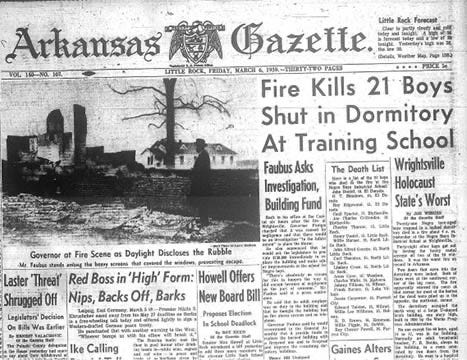
On March 5, 1959, sixty-nine Black boys between the ages of thirteen and seventeen were padlocked inside their dormitory for the night at the Negro Boys Industrial School in Wrightsville, Arkansas. Around four in the morning, a fire broke out. The dormitory doors were locked from the outside. The boys had to fight and claw their way out of a burning building.
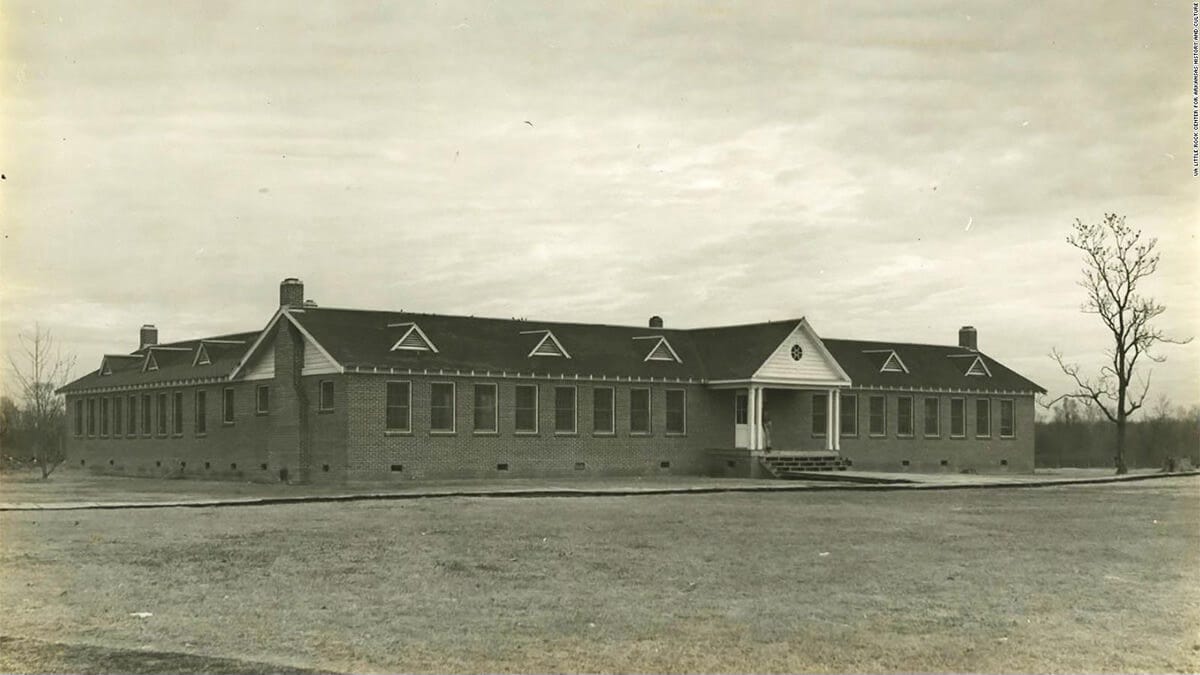
The facility was old, underfunded, and neglected. It sat just fifteen minutes south of Little Rock. Most of the boys were not violent or dangerous. Many were homeless. Some had been sent there for minor offenses such as truancy and pranks. Many were sent there for simply being poor and unsupervised in a state that already saw them as disposable and as trouble. Forty-eight boys escaped by breaking through windows. Twenty-one did not.
It was cold and wet that morning, following thunderstorms in the area. The cause of the fire was never clearly explained. Investigators later pointed to faulty wiring and years of deferred maintenance, but no one was ever held accountable. You can read more about the official reporting here.
What stays with me is not only the fire, it’s how they lived before it. And it’s disturbing.
A 1956 sociological report described the boys sleeping packed together, barely able to move, less than a foot apart. There were no proper bathrooms. Just buckets. Some boys went days without clean clothes, without socks, without bathing. Their conditions were documented here.
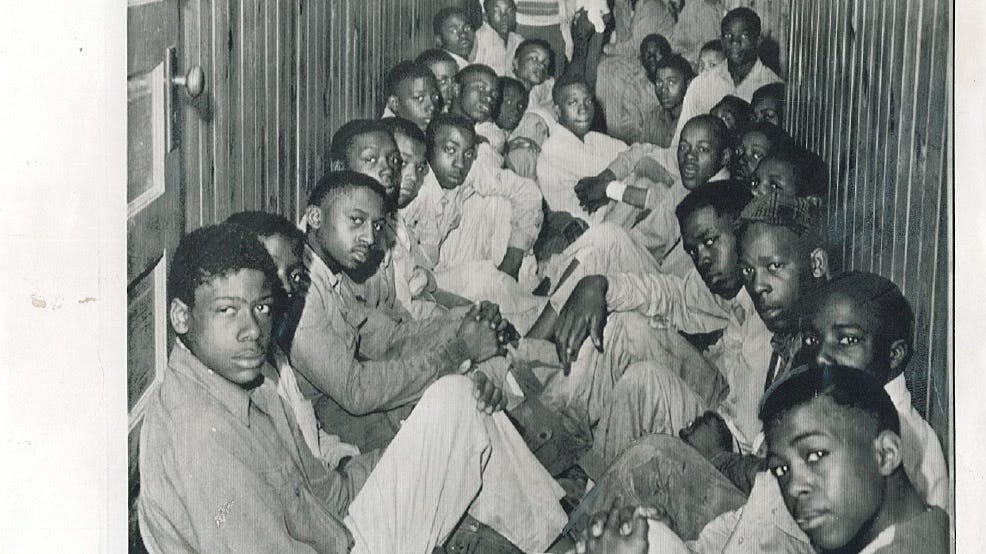
They were CHILDREN, and this was their life.
We like to tell the story of segregation in simple lines. Separate schools. Separate water fountains. We don’t talk enough about the institutions where Black children were confined and warehoused. “Industrial school” sounds almost vocational. Almost helpful. It was a locked building with boys inside.
Today, the land where that school once stood is now the Wrightsville Unit of the Arkansas Department of Correction. A prison.
In 2019, sixty years after the fire, a plaque was finally installed.
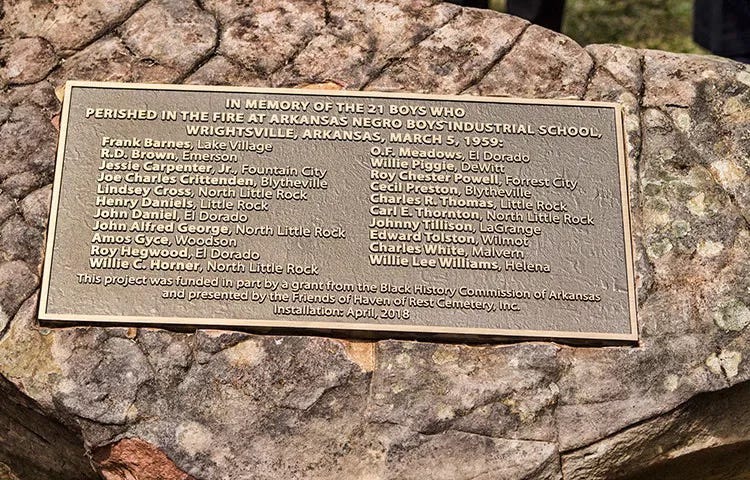
Not justice.
Not accountability.
A plaque.
Reflection
I keep thinking about how easy it is for these stories to disappear.
Not because they are small, but because they are inconvenient to those currently in power.
These boys were not anomalies. They were part of a system that treated Black children as disposable and already guilty before they had a chance to live. Their lives were managed, confined, and controlled long before they were old enough to understand what was happening to them.
And what strikes me most is not just that this happened. It is how familiar it feels.
We still build systems that lock people inside and call it care. We still warehouse the vulnerable and call it discipline. We still place plaques where accountability should be.
History does not repeat itself cleanly. It changes names, but the logic stays the same:
Contain.
Control.
Forget.
But I don’t want to move on.
I want to sit with what this tells us about how we value children and how we value humans in general. Whose suffering gets documented, and whose gets buried.
A plaque is not repair.
A plaque is not care.
A plaque is definitely not enough.
Sixty years.
Long enough for memories to thin out and for responsibility to dissolve. Long enough for the story to feel distant.
It took sixty years to put their names on a plaque.
It took one night to lose them.
And now we are living in a moment where Black history itself is treated as optional.
The current administration backs efforts to limit how racism is taught in public schools. It supports policies that frame discussions of systemic racism as political indoctrination. It cheers on book bans that disproportionately target Black authors and stories about race. It allows federal language around equity and racial disparity to quietly disappear from public-facing documents.
We are told that teaching history honestly is “divisive.”
We are told that naming systems is “woke.”
We are told that children should not feel uncomfortable.
Twenty-one Black boys were locked inside a burning building.
If that truth makes someone uncomfortable, good.
Erasure does not always look like tearing pages out of textbooks. Sometimes it looks like budget cuts. Sometimes it looks like curriculum revisions. Sometimes it looks like pretending segregation was simply separation and not a machine.
When we soften the language, we soften the harm.
When we reduce Black history to a month, we make room for stories like this to disappear.
The same country that padlocked those boys also controls the narrative about what that means. That’s power.
Lock them in.
Call it policy.
Wait it out.
Install a plaque.
Rewrite the lesson plan.
Across the United States, states like Arkansas, Florida, Georgia, Texas, Idaho, Iowa, Kentucky, Mississippi, and others have laws that restrict or ban instruction related to critical race theory and certain discussions of race and racism in public schools. These laws emerge from broader efforts to define what is “acceptable” to teach about American history, often limiting or forbidding conversations about how racism was embedded in law and policy.
In Texas, House Bill 3979 restricts teachers from including discussions about systemic racism and “controversial issues” of race in the curriculum and requires that if such topics are addressed, they be presented with a strict idea of impartiality that effectively discourages honest engagement.
In Florida, laws like the Stop WOKE Act and Senate Bill 266 have targeted diversity, equity, and inclusion programs, and what kinds of race-related content can be part of higher education or K-12 instruction, framing them as “unproven” or harmful.
And in Arkansas, courts have upheld bans on teaching “indoctrination” or critical race theory in classrooms without granting students a right to require that such material be offered.
These are not isolated moments of culture wars.
They are legal structures that define how, whether, and what students can learn about how race shaped this country, including the ways Black children have been locked in, cast out, disciplined, punished, or confined.
We are told that teaching about systemic racism, slavery, segregation, or the consequences of those systems is “divisive.” We are told that lessons that might make someone uncomfortable should be avoided. We are told that history is less important than “neutrality.”
But being neutral is not the same as being honest.
There is nothing neutral about locking the door of a dormitory full of children and burning them alive.
And there is nothing neutral about laws that silence the truths teachers know their students need.
If twenty-one Black boys dying inside a locked building (and why) isn’t history worth teaching, then we don’t want history.
History isn’t a story that fits in neat chapters.
This current regime wants a sanitized narrative because it wants to protect the power structure that produced it.
They want to pretend systems did not shape outcomes.
And they definitely want to try to prevent us from recognizing patterns that look eerily familiar today.
But history, REAL history, is not polite.
It can be inconvenient and uncomfortable.
It names structures that still shape lives.
Real history names power.
It names harm.
It names who gets to speak and who gets silenced.
And it demands we listen.
Other ways to support my work:
Venmo- @Stephanie-Monds
PayPal- @stephaniemonds
Cashapp- $StephanieMonds
Historical Sources
📌 Encyclopedia of Arkansas — Negro Boys Industrial School Fire of 1959
https://encyclopediaofarkansas.net/entries/negro-boys-industrial-school-fire-of-1959-5500/
📌 BlackPast.org — The Negro Boys Industrial School Fire (1959)
https://blackpast.org/african-american-history/the-negro-boys-industrial-school-fire-1959/
📌 Equal Justice Initiative — March 5, 1959: 21 Black boys burned to death…
https://calendar.eji.org/racial-injustice/mar/5
📌 Wikipedia — Arkansas Negro Boys’ Industrial School (overview & aftermath)
https://en.wikipedia.org/wiki/Arkansas_Negro_Boys%27_Industrial_School
📌 Wikipedia — Wrightsville Unit (site memorial note)
https://en.wikipedia.org/wiki/Wrightsville_Unit
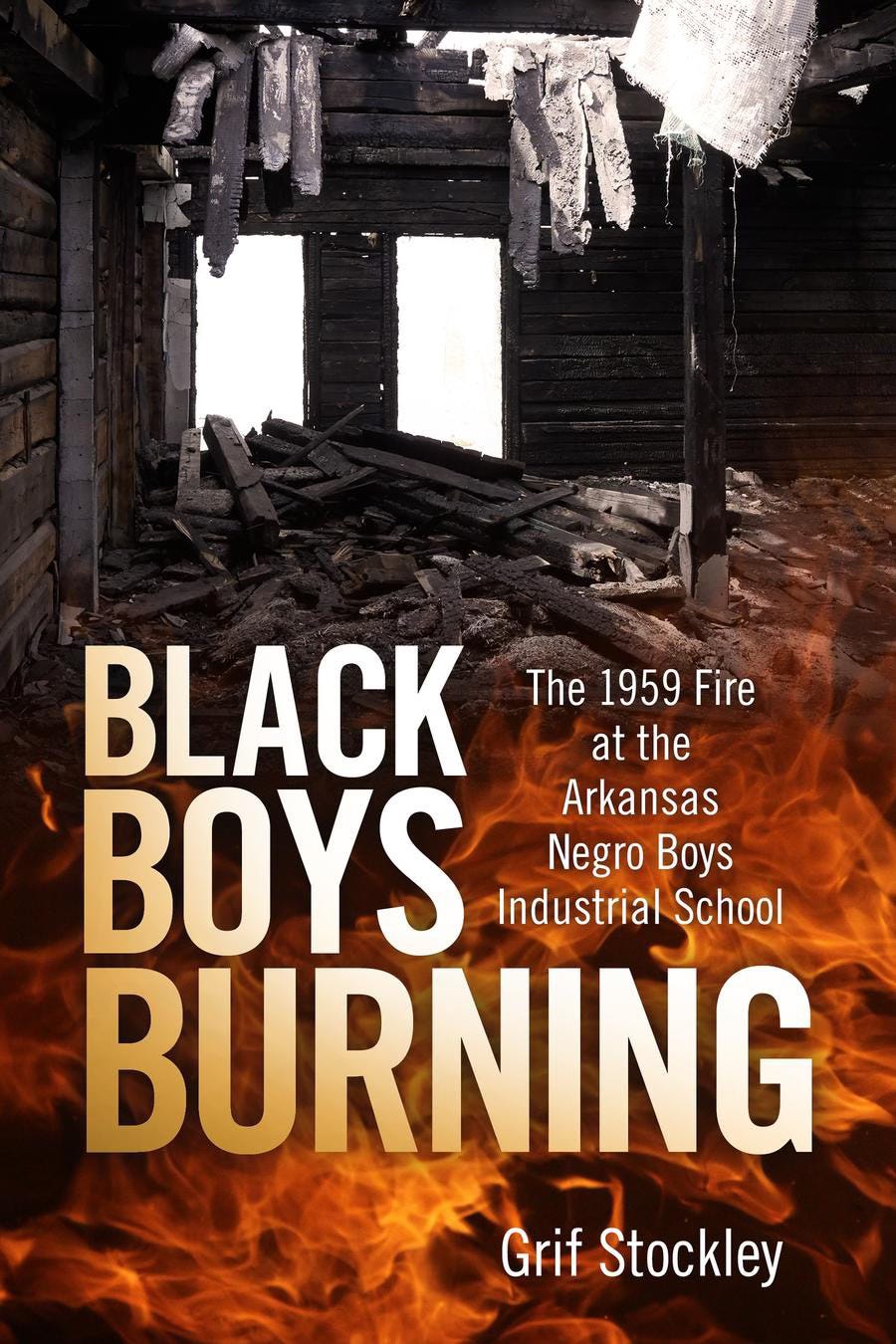
📌 Book reference (deeper historical study) Black Boys Burning: The 1959 Fire at the Arkansas Negro Boys Industrial School by Grif Stockley (University Press of Mississippi, 2017).